Why Is My Sliding Door Hard to Open? 7 Common Causes
April 10, 2025
Why Is My Sliding Door So Hard to Open? 7 Common Causes and What to Do About It
If your sliding door has become a workout every time you try to open it, you're not alone. This is one of the most frequent complaints we hear from homeowners throughout the Tampa Bay area. What was once a smooth, effortless glide has turned into a stubborn, shoulder-busting struggle.
The good news? In the vast majority of cases, the fix is quick, straightforward, and surprisingly affordable. Most issues can be resolved in a single service visit without the need for expensive replacements.
Let's walk through the seven most common reasons your sliding door is hard to open—and what you can do about each one.
1. Worn or Damaged Rollers
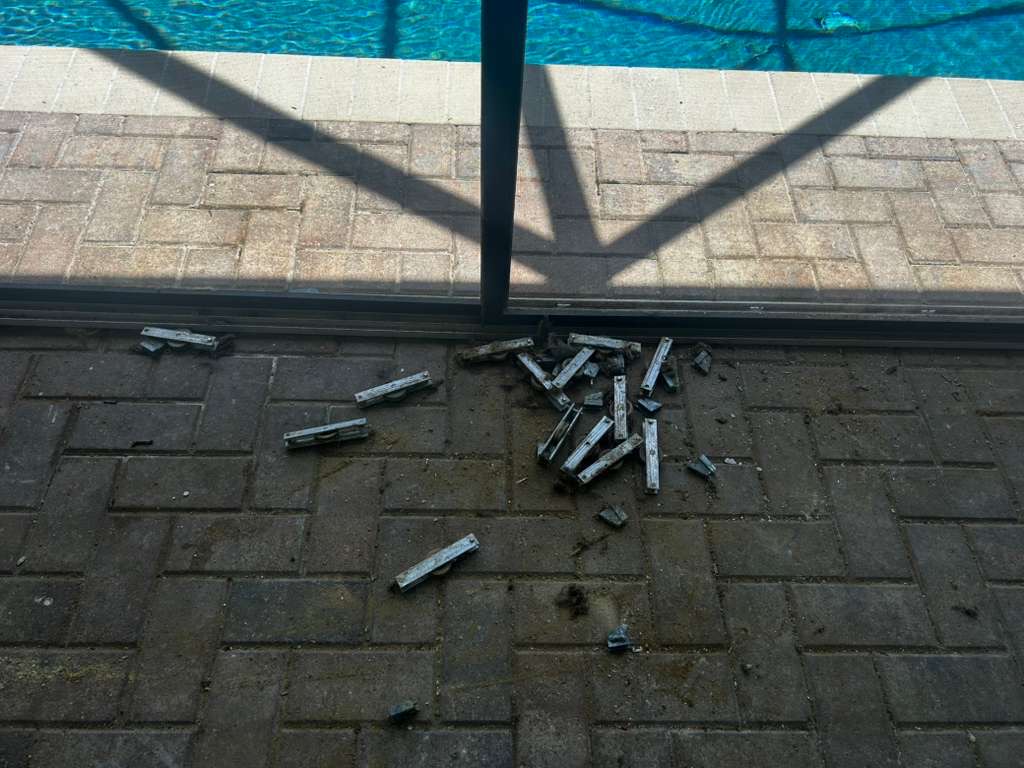
The rollers are the small wheels at the bottom of your sliding door that carry its full weight. They're the workhorses of the entire system, and they're also the most common point of failure.
Over time, rollers wear down, develop flat spots, crack, or become clogged with debris. In coastal areas like Tampa Bay, the combination of salt air and fine sand accelerates this wear significantly.
How to spot the problem: Listen for squeaking, grinding, or scraping sounds when you operate the door. If the door jumps or rattles as it moves, or if it feels like it's catching on something, the rollers are almost certainly the culprit. A door that frequently comes off its track is another clear sign that the rollers are too worn to keep the door properly seated.
What to do: Cleaning the rollers and track may provide temporary relief, but worn rollers typically need to be replaced. This is a job best left to professionals, as removing a heavy glass door panel requires care and proper technique. Roller replacement typically takes one to two hours and restores smooth operation immediately.
2. Dirty or Bent Track
The track is the metal channel at the bottom of your door frame that guides the rollers as the door slides. It's constantly exposed to the elements, and in Florida, that means it collects dirt, sand, pollen, and salt residue at an alarming rate.
A dirty track creates resistance—the rollers have to push through grime instead of gliding smoothly. Over time, that resistance wears down both the rollers and the track itself. Even worse, if debris gets trapped and the door is forced over it, the track can become bent or dented, which prevents smooth rolling altogether.
How to spot the problem: If you can see visible debris in the track, or if the door sticks at a specific point along its travel, the track is likely the issue. A bent track may show visible dents, dips, or raised sections.
What to do: Regular cleaning every three to six months prevents most track problems. Use a vacuum to remove loose debris, then scrub with a stiff brush and warm soapy water, and dry thoroughly. If the track is bent, minor dents can sometimes be straightened, but significant damage requires track replacement. A professional can assess whether repair or replacement is the better option.
3. Misaligned Door
Over years of use—or after a sudden impact like someone accidentally running into the door—your sliding door can become misaligned. This means the door no longer sits square within its frame.
The most common symptom of misalignment is a door that has dropped on one side. When this happens, the bottom of the door rubs against the threshold or the track as you try to slide it open. You may also notice an uneven gap at the top or bottom of the door when it's closed.
How to spot the problem: Look at the door from a distance. Does one side appear lower than the other? Does the door scrape along the bottom track when you open it? These are clear signs of misalignment.
What to do: In many cases, misalignment can be corrected by adjusting the rollers. Most sliding doors have adjustment screws that raise or lower the door on each side. This is a relatively simple fix for a professional but can be tricky to get right on your own—over-tightening or uneven adjustments can cause additional problems.
4. Swollen or Warped Frame
Florida's heat and humidity are tough on building materials, and wood frames are especially vulnerable. When wood absorbs moisture from the air, it expands. Over time, this expansion can reduce the clearance between the door and its frame, making it difficult to slide.
This issue is particularly common in older homes or in doors that face the sun for extended periods. The combination of heat and moisture causes the wood to swell, warp, or even rot, which can severely affect the door's operation.
How to spot the problem: If the door seems to stick more during humid or rainy seasons, and if the frame feels soft or shows signs of moisture damage, swelling is likely the cause. You may also notice paint peeling or cracked caulking around the frame.
What to do: Minor swelling may improve during drier months, but recurring issues suggest the frame needs attention. In some cases, sanding or planing the frame can create additional clearance. If the frame is severely warped or rotting, however, replacement may be necessary to restore proper function.
5. Damaged Weatherstripping
Weatherstripping is the rubber or vinyl seal that runs along the edges of your sliding door. Its primary job is to keep out drafts, rain, dust, and insects. But when it becomes stiff, cracked, or compressed, it can also create extra friction that makes the door hard to open.
This is especially noticeable on hot, humid days, when the rubber expands and grips the door more tightly. Over time, weatherstripping can also accumulate dirt and grime, adding to the resistance.
How to spot the problem: Inspect the weatherstripping along the top, bottom, and sides of the door. If it appears cracked, flattened, or brittle, it's likely contributing to the problem. You may also notice drafts or water leaks when the door is closed.
What to do: Clean the weatherstripping with mild soap and water to remove grime. If it's damaged, replacement is inexpensive and effective. Weatherstripping kits cost between $20 and $50 and can often be installed by a professional in under an hour.
6. Off-Track Door
Sometimes the door doesn't just stick—it actually comes off its track entirely. This is a more serious issue that typically happens when the rollers are badly worn, the track is damaged, or the door has been forced open with too much pressure.
If your door has come off its track, the most important thing to remember is do not force it. Pushing or pulling a derailed door can easily crack the glass, bend the frame, or damage the rollers beyond repair.
How to spot the problem: The door will feel loose or unstable, and it may tilt or wobble when you try to move it. You'll likely see that the bottom of the door is no longer seated in the track channel.
What to do: This is a repair that requires professional attention. A technician will carefully lift the door panel back onto the track, inspect for damage to the rollers and track, and make any necessary adjustments or replacements to prevent it from happening again.
7. Faulty Lock Mechanism
Finally, the lock itself can sometimes be the cause of a hard-to-open door. If the lock is misaligned, bent, or corroded, the latch may bind against the strike plate, preventing the door from sliding freely.
You may notice that the door feels fine until you try to lock or unlock it, at which point it becomes stiff or sticky. This is a clear sign that the lock mechanism is the issue.
How to spot the problem: Test the lock with the door in different positions. If the lock engages smoothly when the door is slightly ajar but binds when it's fully closed, misalignment is likely the cause. Visible rust or corrosion on the lock mechanism is another warning sign.
What to do: In many cases, lock issues can be resolved with a simple adjustment to the strike plate or the door's height. If the lock itself is damaged or corroded, replacement may be necessary. Since a functioning lock is critical to your home's security, this is a repair that should be handled promptly.
When to Call a Professional
Many sliding door issues can be resolved with cleaning, lubrication, or simple adjustments. But if you've tried the basics and your door is still hard to open—or if you notice any of the more serious signs we've covered—it's time to call in a professional.
The good news: most sliding door repairs in the Tampa Bay area cost between $150 and $400, which is a fraction of the cost of a full door replacement. And because most repairs can be completed in a single visit, you'll have your door back to normal without a lengthy disruption.
At All Sliding Repair, we specialize in diagnosing and fixing sliding door issues of all kinds. We serve homeowners throughout Tampa, St. Petersburg, Clearwater, Brandon, and Wesley Chapel, and we offer same-day service and free, no-obligation estimates.
If your sliding door is giving you trouble, don't wait—small problems become big ones quickly. Call us today at (813) 576-2283 to schedule your appointment. We'll have your door gliding like new in no time.
Need same-day help in Tampa Bay?
Free estimates · Licensed & Insured · 90-Day Guarantee
Service Areas
Same-day sliding door & window repair across 25+ cities in Tampa Bay.